2.4.09

Note To Self


As the guitar part of this project is wrapping up, I wanted to reflect on a few things I've learned through the process.

1. Test on scrap. And have scrap to test ON! I should have started a couple of sanded and sealed boards to test finishes and relic techniques before I worked on the body itself.

2. My biggest mistake of the project was allowing water to seep into the edge of the control cavity route and screw holes during my first round of wet sanding. The wood swelled and created a flat spot in the finish. Way too much water, and I let it sit around the edges. I need to make sure I really hit the routes with primer early on. I also learned to re-wet constantly to keep the sandpaper from clogging. I also saw a guy using a 2 litre bottle cap as a sanding block and this worked very well for the edges

3. With the decal process I used too much gold gel ink and mod podge, this added material made it dificult to get a firm flat seal on the headstock. Thin is the way to go.

4. Spray thin coats, Color was fairly forgiving, but the tinted laquer would show even the tiniest overlap or run.

5. I've been looking at alot of old guitars and the stereotypical relic guitar wear isn't that consistant with alot of the old gear I've seen. Very few of the late 50s and 60s strats seem to have extensive forearm wear. Alot of edges wear but this seems to be due to a buildup of dents and dings on the rounded edges that allow larger sections to break away.

6. The direct acid etch process on hardware is way too heavy for a "real" relic look. I like the effect, but it's not really an authentic effect. An indirect method using muratic acid in a closed container looks 100 times better than the results I achived. Took at http://www.relicdeluxe.com/ for some great relic techniques.

7. The more visulazation and planning I do before I start, the fewer mistakes I make.

1.4.09

Almost Done


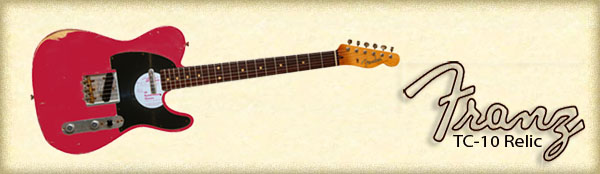
Here are a few details of the checking and relic process of the tc-10, Assembly and setup tomorrow.


Toner Transfer


Here's my first attempt at toner transfer. The inkjet paper has several layers that need to soften in water and peel away from the surface leaving only toner and brass. I think I used too much heat and fused a thick plastic layer with the paper on the face of the page, this caused allot of the toner to pull off with the paper. I also might need to let the piece soak longer.

As long as I can keep the detail around the art I should be ok. I can manually retouch the edges with paint. I will try again today.

31.3.09

Faceplate Art


The process for the faceplate etching is complex, and as I was working I decided that I needed to kick the graphic side up a bit. I was inspired by the intaglio printing on a dollar bill and decided to try a vintage scroll type graphic for the art on the amp. Obviously its a breaking from the 1950s look, but who am i kidding? One of my next projects is going to build a tube amp from scratch. This style of graphic really has the right feel for what I have in mind for that project. I'm moving the input jack to the side of the amp for the sake of symmetry, this will also allow me to create another etched brass plate.


This is what the mask looks like, I placed the knobs and lamp for scale. The brass will be etched away in the white areas. The brass will then be primed and painted. Then I'll sand the surface leaving the paint in the etched areas, a little tarnish and clear coat and it will be done!


This is the image I developed in photoshop.

I tried a toner transfer last night with no success, with more research I found that you need to use a very specific type of inkjet paper. It was on clearance from staples and will be arriving in a couple of days.

Thinking Setup


I'm waiting for the finish to settle a bit before wet sanding. I've spent some time reading up on final setup.

I was surfing telecaster.com today and found a great thread that mentioned guitar setup and the below method for creating a solid connection between the neck and body. I'm going to give a try when my tele is done.

"Another thing I do is to loosen the neck screws about a 1/4 turn when the guitar is in tune (there should be a cracking sound - it's OK) and tighten them back. The guitar will drop in tune and will need to be re tuned but.... what a difference.... It forces the neck for a much tighter contact with the body (heel against pocket wall). Adding those two things to any build (or existing guitar/bass) will make a noticeable contribution to tone and sustain."

29.3.09

A Cluttered Desk


“If a cluttered desk is a sign of a cluttered mind, then what are we to think of an empty desk?” - Albert Einstein


Faceplate layout in progress..

28.3.09

I'm Still on the Case


I attached the grill cloth using hot melt glue. I had no idea how tough grill cloth is. I tried a new exacto and sharp scissors and both had a hard time cutting the fabric. I used a hot melt glue gun to attach the bottom edge and then gently stretched the fabric and glued the top edge. I repeated the process for the sides checking to make sure the tension was even across the face of the fabric. I made relief cuts for the corners and stretched and fitted before gluing. I was tempted to use staples but I'm afraid I'd go through or crack the grill.

27.3.09

Almost Done


I'm in the home stretch. I've added some more detail to the headstock and neck, A little walnut stain really punched out some of the scratches. At this point the neck is done, I'm in the process of clear coating the body. I should be done within a week.

I cut the grill and counter sunk screws so it can be attached to the case. I also sprayed it with primer on the front face. It's transparent behind the grill cloth.

Next week I'll etch the control panel. Stay Tuned!

26.3.09

Slow Going


I haven't had much time to work on the projct over the past few days. I did spend some time working through how I was going to attach the grill and speaker mount to the radio case. I ended up counter-sinking screws in the 1/4inch oak grill and these will sandwitch through the radio case and the speaker mount. I used a retaining nut behind the grill so I can glue the grill cloth to the front and keep everything in place. I also used a brown primer on the oak in case it shows through the grill. Photo to follow.

24.3.09

Deep Breath, Bang


I have two legitimate "old" guitars, a 70s tele custom and a 60s hagstrom II. I've spent allot of time with both and I've studied the wear patterns and how the scars have been naturally buffed over time.

I've built a color that I like, now I need to work on the texture. On my real tele there's allot of wear on the top of the headstock where its been bumped countless times. The finish has a slightly milky appearance where the abrasions have occurred. No big gouges, but allot of small dents and bumps that add up.

Now, to start on my guitar, this was a little harder than I thought it would be. The hardware was no problem, into the hydrochloric acid you go. It's tough putting a ding into a finish you just completed. I chose a pair of end cutters for the first blow. Deep breath, tap, inspect, slight dent, good. change tool, framing square, tap, inspect, tiny gouge, good. Rinse and repeat. My favorite tool was a heavy plastic screwdriver handle, it made nice subtle dents. I liked the slight dents in the finish where the nitro didn't show any signs of cracking but you could see the mark when you would turn the neck and inspect it. I created a ratio of about 10 dents to 1 nick. No gouges yet.

The next step will be to add a super thin wash of color to the damaged edges to simulate the grime that will accumulate in the wounds. At that point I'll evaluate and repeat the process, dents and nicks and wash, making the effects more subtle with each pass. Hopefully this will start to simulate the depth you see in old guitar finishes.

Here's the first round of dents and dings, no wash yet. I've created about 90% of the look I'm going for. The next rounds will be very subtle in comparison.


22.3.09

Vintage Color


I'm really happy with the color of the vintage amber tint and the appearance of the logo underneath. I still need to build up some clearcoat to hide the edge a little more.

I realized that shooting something translucent in allot more difficult than an opaque color. There are a couple of spots where the color built up a little too much. I wet sanded the body with 600 grip paper. I applied too much water to the surface and the paint is swelling along the grain of one of the screw holes. I'm a little frustrated by this, but on a relic guitar isn't that called "character"?

I stopped sanding for the day after consulting Google and finding that when this type of swelling occurs it's easy to sand through the finish. I'm curious to see how this effects the finish in that area at the moisture dissipates, if it dissipates.

Here are some photos from the progress. I'm getting eager to see the guitar together so I placed the pick gaurd and hardware on top of the body.


21.3.09

Leap of Faith


I created my decal for the neck using an awesome technique from Bill Jehle at projectguitar.com creation and application went well. Here's a quick recap and photos:

An inverse logo outline was laser printed on transparency film. I used a pilot gold gel pen to color in the logo. I then applies mod podge (matte) to protect the gel paint from the adhesive spray. I masked the headstock and shot spray adhesive to the headstock and logo. On my test logo the spray can propellant pushed the logo about a 1/2 inch an left a little residue on the top of the logo. I used the tip of tweezers to hold the logo down when I sprayed the second one. After waiting the recommended minute i used tweezers and placed the logo on the headstock. I rolled my finger across the surface to get rid of a few tiny air pockets. Most of the overspray on the headstock balled up and rubbed away as I rubber out the air pockets. After 5 minutes I used a drop of naptha on a paper towel to clean up the rest of the adhesive residue.

After an hour a shot my first coat of nitro (stew mac vintage amber) on the headstock and neck. I'm a little worried about a reaction with the sanding sealer, but following the advise of a fellow builder on guitar attack I tested on scrap and it worked fine.

I decided to post on the blog to kill time before my next coat of nitro.

Here are photos from the process:


Finished logo before the adhesive process


Layer of Mod Podge starting to dry


Trying to stay between the lines with the gold gel pen


OK a half hour is up, I got go check the finish and shoot another coat!

20.3.09

Relic is My Favorite Color


I know a lot of the folks disagree with the idea of a relic instrument. The battle scars should be earned and not applied with a razor blade. I collect antiques, I live in a house built in 1920. I love the patina of old stuff. New stuff makes me nervous. When I was 21 I spent my “life savings” to buy a 335 custom shop. It was a tobacco sunburst, and it was amazing, a flawless instrument. Every time I picked it up I was afraid I was going to scratch it. I felt relieved when I sold it a couple of years later. In comparison my favorite guitar is a 70s tele custom that’s was a disaster when I bought it. I never thought twice about laying into it and a scratch only adds character. Old stuff rocks.

19.3.09

3rd Can of Krylon

I got my third can of krylon on the body and I'm going to let it sit for a week or so before I wet sand.

In the interim I have the amp to work on. I got my brass stock in the mail today - gotta love amazon prime. Pics below show the progress I've made. I've shaped the oak plywood for the grill and cut the speaker mount to fit the philco radio case.


Brass Tarnishing Techniques


Scraps from the web on tarnishing brass, this is what I found with a quick search. Nothing here has been tested.

1. Choose a glass container with lid of sufficient size to contain the item requiring aging. Find some cotton wool and soak in ammonia and place in bottom of jar. Suspend brass item in jar and attach top. Brass item will tarnish fairly rapidly say 20 minutes depending on room temperature. Remove from time to time to check amount of aging required, then remove and neutralize ammonia with clean water.

2. You will think i am a freak for this, but bury it in the kitty litter box for a couple of days. Then wash well.(!) It will give a really interesting oxidized effect. (obviously i have way too much time on my hands)

3. You can repatina brass and bronze depending on the look you are after, simply, and at little expense. I use a closed container, bucket & lid, or whatever comes closest to fitting around the brass item. Polish and clean off any hand prints with paint thinner, wear gloves at this point. Locate a small jar and lid, place in this 1/8 cup of ammonia. Do this out doors with a breeze at your back. Masks and gogles are a bennefit with ammonia, but no mask will seperate amonia from the air you are breathing, so be warned. Next put the brass item in the container, put the small jar inside, remove the lid from the jar and cover the bucket. A clear container works well here, or else look inside from time to time to see how things are doing. Goggles help the peeking. Keep track of the time if you wish to repeat, and replace the ammonia with the same amount of fresh ammonia each batch. Next I take a polishing cloth, clean and very soft, buff the edges for highlights, spray with brass lacquer, or spray shellac. Some hobby shops are selling metal ageing chemicels that can give assorted colors, so if the ammonia isn't the darkening you want, try them too.

4. Salt and Vinegar

18.3.09

Wear Your Respirator


My wife noticed a rash on my face at the edges of my goatee this morning. It was very red but I didn't feel any irritation. On closer inspection the color is berry red, krylon berry red to exact. My respirator isn't sealing very well, I have to snug up the straps.

Hmmm... I wonder what my lungs look like.

I think I'll paint my next guitar a nice youthful brown to get rid of the grey in my beard. Anyone have any guitar finishing techniquest that will help with a bald spot?


17.3.09

Another Trip to the Hardware Store


I purchased a sheet of ¼ oak plywood, a pack of blades for my scroll saw, and some brass hardware for the amp build. I liberated some brown grill cloth from a pair of speakers sitting in the basement. I’ve started the layout to reinforce the radio case and mount the speaker. I also ebayed a set of jewel lamps, unfortunately I couldn’t find the vintage purple pilot light I had in the archives. I’m sure it will turn up as soon as the new ones arrive.

I’m very excited about creating the control plate for the amp. I posted on the telecaster.com forums and shared a site showing how to etch brass. I think a tarnished brass control plate will a custom etched graphic will be a perfect fit for the amp! Links here and here

I’m on my second can of krylon on the tele body and I’m getting ready to apply the headstock decal and start shooting clear coat on the neck.

Here’s a 10 minute 3D model of the amp mod:


15.3.09

Paydirt at Hamfest


I'm finding that the finishing work on the guitar requires allot of patience and I need another project to keep me busy so I don't rush through the work and get sloppy.

I spent part of the weekend taking my grandfather-in-law to the Toledo Hamfest (Home and Mobile Radio, not honey baked) I'm not a ham, but I appreciate a good electronics themed flea market as much as the next guy. My mission was to find some hardware and a case to build a small amp to accompany the TC-10.

I got lucky and I found about everything I need to build a cool "vintage" looking amp - for $20!!!!

Here's what I found:

philco radio with a great case $5.00 (haggled down from $10)

pignose hog 20 practice amp (not working until I replaced the fuse!) $10.00

3 bakelite knobs, vintage power switch and fuse holder $5.00

I cracked open the pignose, solved the fuse issue and found a suitable power supply. It came with a mismatched 15v laptop power brick. It sounds great for a ten dollar investment. I broke down the amp so it can be mounted in its new home. The hog 20 has the option of battery power and also has two 6v sealed lead acid batteries, I'm wondering if I can save weight and cost by using a NIMEM cells? A little research is in order.

Here are photos of the booty in all it's vintage splendor:

Philco case, pignose speaker and guts, knobs, switch, fuse holder, and pixel the cat.

Philco detail front

Philco detail back, the case has an awesome hinge and latch system.

hardware detail (click the image to view LARGE, the detail is great)


In addition to the amp stuff, I found a huge roll of copper foil $3, a shopping list of electronic components for other projects $40?, a trashed Victrola $10, a couple of cool vintage radios $20(decoration) and tron on laser disk $2(I'm a geek, I collect tron memorabilia)

I have a cool purple jewel lamp holder that I pulled from something a while ago that will look great on this project. I'll have to find a suitable grill cloth and make a bezel of some sort, I think It will be a cool little amp when it's finished.

12.3.09

Waiting for Paint to Dry


The color, valspar berry, is consistent across the body, the salmon appearance on top was caused by the light source.


I'm in the process of painting the body, I'm 5 coats in. I have one slight sag in the paint where I shot a little to long, but at the advise of Mr. Holley I'm going to wait to knock it down until I have a little more paint on the guitar. I'm waiting to wet sand until I have the clear coat on, again at the advise of Mr. H.

I spent a little time planning the relic pattern for the body, I'm going to buff between layers of gouging to create layers of wear. I'm also hoping I can create a checked finish. I'm trying to improvise a high UV light source to help cure and "age" the finish before attempting checking with heat gun and compressed air propelant.

Here's a sketch of the planned carnage:

10.3.09

Case Candy


I gave a long lab assignment today that kept my students in the zone, I had time to research some old fender advertising from the 50s and 60s. It inspired me to create a registration card for my relic. It sparked an interesting discussion on the role of research in design with my students.

The card is designed to fold in the center, the first image is the exterior and the second is the interior. I used text from several cool old fender advertisements I found at relicdeluxe.com. Here's what I came up with.

Exterior text:
Another "first" from Franz. First again in the field of amplified music... the thrilling new TC-10 by Franz! Years ahead in design, unequaled in performance. Everything is new in this revolutionary instrument. Two separate pick-ups, special tone control and "comfort contoured" body design all mean there's a new thrill in store when you play the Franz TC-10.

Interior text:
Franz TC-10 Guitar Perfection in a solid body comfort contoured professional guitar providing all of the finest features. Choice hardwood body finished in an array of contemporary colors. Maple neck with rosewood finger board, black pick guard and lustrous chrome metal parts. Two advanced style adjustable pick-ups, one volume and one tone control and a three position instant tone change switch. The adjustable Franz bridge insures perfect intonation and the softest action. The neck has the famous Franz truss rod. The TC-10 is available with or without the Franz built in tremolo. The brand-name Franz represents superior quality. That is why leading musicians prefer Franz fine electric instruments. See the complete Franz line at your leading music dealer and write for the latest catalog of Franz Electric Guitars, Amplifiers, Strings, and Accessories.


Here's what I developed, its a work in progress. I'm going to use the exterior halftone pattern on the interior gold panels, I'll also add images of hardware in the panels.


9.3.09

Improvised Paint Booth


I was having a hard time finding an appropriate place to spray the body and neck. I ended up lining part of the crawl space about my studio with visquene and stapling a furnace air filter over a vent, not sure if that will do anything but it seemed like a good idea. I emptied a can of old clear coat on the surrounding surfaces thinking that the aerosol will hold down dust particles in the space. With a large fan running in the room below I'm getting decent ventilation without kicking up much particulate matter. I'll see how good this is when I start with color.

Thinking safety I invested in a good quality respirator and I always wear eye protection. I shot 3 thin coats of valspar primer (over 8 hours) on the body with good results. I then masked the neck and shot two coast of sanding sealer on the headstock, the results blended nicely with the existing finish on the neck.

Here's the primed body


Here's a shot of the newly sealed headstock. I had a hard time getting the contour on the back of the headstock where I wanted it.

8.3.09

Stage Makeup


Here are photos of the completed hardware, other that cutting down the screws that adjust intonation. I'm very happy with results. The level of crime and corruption is well beyond most of the vintage instruments I've seen. After I had completed my first round of etching and rusting I think I did a pretty good job of creating an accurate amount of deterioration, given the type of chrome on the saga (reference the photo on my 4.3 post).

I showed the results to my wife and she couldn't tell I'd done anything at all. Granted shes not technical and cant tell the difference between a Les Paul from a Strat, but it made me rethink the effect I was going for. Ultimately I want "stage makeup" not tiny the nuances that only a vintage buff will really understand, I'll save that effect for another guitar. So it was back to the etching bath for another round. I ended up with the “wrapped in an army blanket and left in the corner of the garage behind old wooden shutters and forgotten for 50 years” look.

A few note on process: After re-etching I did a short rust bath (about 2 hrs) I ended buffing most of that effect off with the exception of the tuner covers, I liked the green cast they picked up. I rubbed black shoe polish into the chrome, it caught in the corners and pitted areas and added a slight layer of grime. Before I reassembly I hit the parts with a layer of clear coat.

For the pickup a used an exacto and carefully scuffed the edges and took a few small bites out the edges with end cutters and then back to the exacto to soften the cut edges. I also used a little brown oil pastel near the magnets to simulate rust.

6.3.09

A Quick Cut


We had a wonderfully warm day so I ventured out to my shop and cut the headstock down to shape. I smoothed the profile with the new drum sander kit attached to my drill press. It worked nicely.

I shaped the headstock from a telecaster CAD drawing, the position of the tuners is a little off releative to a real tele but I think it will work fine on the Saga. I'll post the file if anyone is interested.

5.3.09

Etching Day


I decided to start with the larger pieces to establish the amount of material. I wanted to chew through. I used a solution of 50% water and 50% etchant and submerged the bridge and control plate for three minute intervals. Between each dip I rinsed in water and used a paper towel to rub away the corroded remnants on the surface of the metal. I ended up etching for around 20 minutes. The result was slightly pitted with a nice dull reddish brown tone.

After drying the parts I applied the rusting liquid and let it sit for about an hour. The result left a very green surface on the metal but when this was buffed away it darkened the the finish slightly and slightly broke down lines of scratches in the metal.

I repeated the process with the smaller hardware. My biggest concern were the small threads on the bridge so I held back the small stuff and I put a bead of hot melt glue through the threaded parts of the bridge saddles. I'll boil the glue out after etching.

I separated the hardware into surface area similar batches and used a couple of glass jars and etched the parts in bulk. After the water wash I dried the parts and gave them a shot of wd-40. I may "rust" a few more of these before assembling later.

The last step of the day was to apply black shoe polish on the big parts to decrease the contrast in the finish a bit.

Heres a pic mid rust, I'll post photos of the completed hardware once I have the bridge and control plate back together.

4.3.09

Round and Round


I made a sketch of the tuners and then broke them down so I could start the hardware relic process. I placed all of the small hardware into a small rock tumbler with a handful of stones and let it bounce around for about two hours. Unfortunately the control plate wouldn't fit so it looks like I'll be doing that one manually with a coffee can.

I did a test on the body of the shown tuner with etchant and it knocked the shine off rather well, compare it to the shiny but scuffed appearance on the top of the peg. The green cast on the bridge and the side of the tuner is from a computer monitor. Click on the image above for a BIG view.

As my research has continued I found a wonderful site relicdeluxe.com This site is indispensable for creating a relic instrument.

2.3.09

Teardown

After everything was together and working correctly I started the process of tearing it back apart. I re tasked a flip top plastic organizer to keep all of the hardware organized and dissembled to individual components.

Thinking ahead to reshaping the headstock, I picked up a 21pc drum sanding kit at sears hardware for 15.99.


T
he next step will be to start adding about 50 years of wear to the metal hardware.

28.2.09

12th Fret Plays Sharp - move the saddle away from the fingerboard
12th Fret Plays Flat
- move the saddle closer to the fingerboard

The Saga Begins


The kit arrived well packaged with parts in divided bags. I was mocked by several coworkers who had seen the package in the office and popped into my lab and made bad air guitar moves telling me it was a long way to the top if I want to rock and roll (I was mildly impressed with the AC/DC reference)

With the kit safely home I unpacked the kit using a plastic parts tray to sort the hardware. Following the advise of most Saga builders I decided to assemble the kit before starting the
finishing process. This took the better part of three hours. The guitar went together quickly. The neck fit the pocket in the body beautify. The pick guard is out of alignment by a few millimeters but this is being replaced anyways. I ran into trouble when I tool a closer look at the electronics on the control plate.

I think it was someones first day at the saga factory:

A redundant ground wire was running from the from the volume pot to the tone pot that popped off with the first touch. Snip

A black mystery connector (another ground) had no corresponding wire from the pickup cavity. I thought this was a ground for the bridge but there was another one correctly labeled. Snip

Connections have a bullet style connector and a section of heat shrink tubing, but the ground from the pickups would have required an adapter to accept two bullet connectors. Snip

The last straw was the three way switch that was wired incorrectly the joints looked cold (dull and pitted as did all of the connections for that matter) and the leads from the pickups didn't bridge the two terminals on each side of the switch. At this point I decided to get out my soldapult and tear all of the connections down and start over. This added about an hour but the guitar sounded 10 times better after I was done.

Don't get me wrong I'm not complaining at all! I have no idea how this kit can be sold this inexpensively. I was expecting two pots, a cap, switch, jack and a coil of wire in the nicely divided bags containing the other parts. I'm sure saga would have also included a small coil of solder.

I strung the guitar up with the included strings and started the setup process. I dropped the saddle height to get things in the right ballpark, the neck looks great right out of the box. I made quick work of the setup with the exception of the a small problem with the E and A saddle. Intonation on the E and A strings are still a little sharp and I'll have to cut the tension spring down a bit so I'll have the clearance to pull the saddle back a few millimeters.

I spent a few minutes adjusting pickup height, and got a decent balance between the bridge and neck output level. Clearance on the neck pickup might be a problem if you really layed into the guitar but I'm usually not a heavy handed player.